















Spine Plus Blog
Myofascial Pain and Trigger Points
Published: 19 February 2015
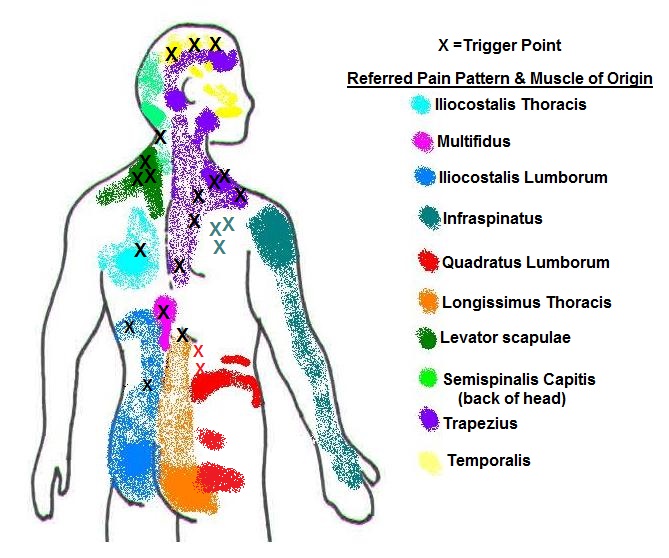
A trigger point is essentially a tender "knot" within a taut band of shortened muscle tissue. These can cause pain both at the trigger point itself and in other areas at a distance through referred pain patterns.
How Trigger Points Cause Pain
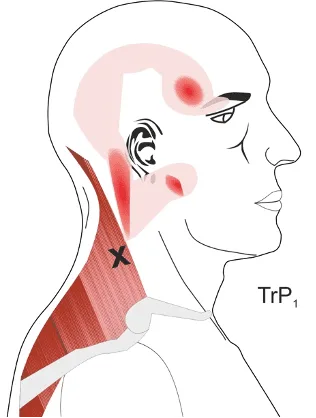
The most common place for a trigger point to form is the upper trapezius muscle, at the top of your shoulder. That one usually refers pain up into the head and restricts neck movement. But trigger points anywhere in the body can refer pain to seemingly unrelated areas. For example, trigger points in the gluteus minimus around the hip may produce leg pain that resembles, or accompanies, sciatic nerve compression.
Each muscle has its own characteristic pain referral pattern, which is why the source of the pain is often nowhere near where it is felt. For a comprehensive list of trigger points and their pain referral patterns we recommend triggerpoints.net.
What Causes Trigger Points?
Muscle stress creates trigger points through either sudden trauma (falls, accidents, improper lifting) or prolonged low-level tension from poor posture, joint degeneration, or emotional or metabolic strain. The physiological mechanism involves continuous neurotransmitter release causing self-sustaining contractions at the neuromuscular junction. There is ongoing research into what's actually happening physiologically within a trigger point, but we know there is continuous low-level spontaneous electrical activity at the site. This is what causes the self-sustaining contraction. Even if you consciously try to relax or stretch that part of the muscle, the knot simply won't relax. The resulting muscle tension can reduce local circulation, causing premature fatigue and further tension, creating a self-perpetuating cycle.
Treatment Options
Trigger Point Dry Needling (Medical Acupuncture): Needles target the hyperirritable muscle band to elicit a "twitch response" that deactivates the trigger point while improving local blood flow. This is often more effective than massage for deep trigger points that can't be adequately reached by surface pressure.
Trigger Point Massage: Short, slow, deep strokes perpendicular to muscle fibres with minimal oil maximise tissue contact. Specific massage tools can enhance precision.
Myofascial Release: Gliding strokes with oil stretch muscles and their fascia lengthwise, addressing the broader fascial restrictions that often accompany trigger points.
Our practitioners incorporate these techniques into standard sessions or as part of specialised myotherapy treatment. Call us on 020 8506 1000.