
















Spine Plus Blog
Sciatica Pain: Causes and Treatment
Published: 19 February 2015
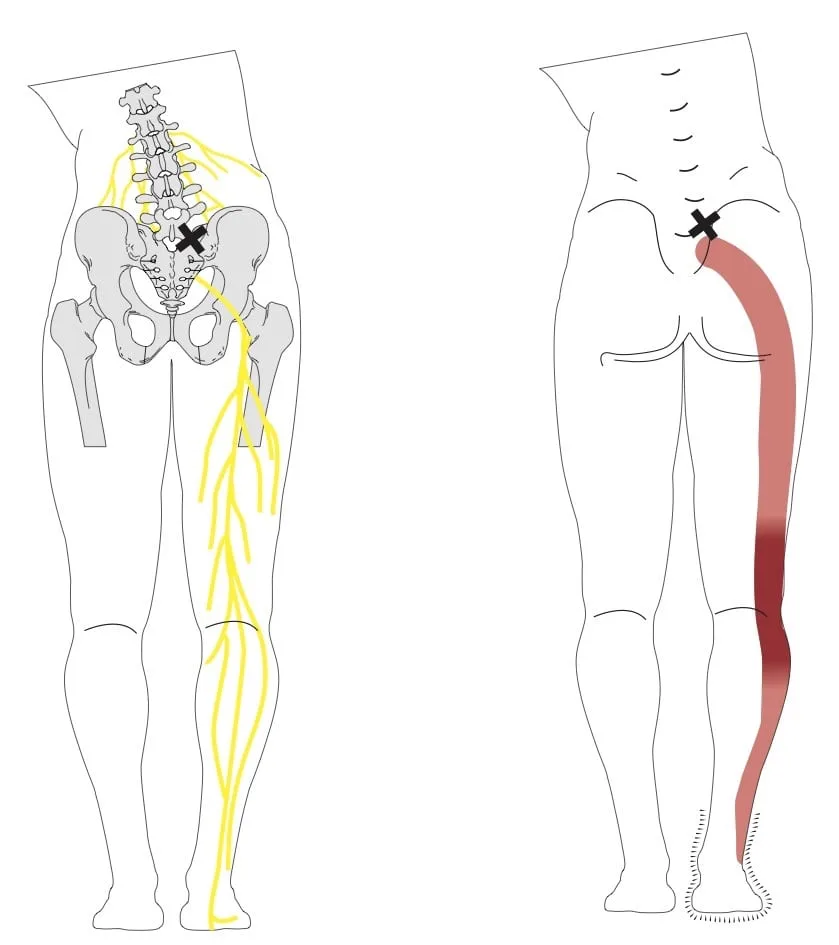
Sciatica involves pain felt in the buttock or down the back of the leg as a result of irritation or compression of the sciatic nerve or its nerve roots. Beyond pain, symptoms can include tingling, numbness, or muscle weakness severe enough to impair walking or standing on tiptoes.
The Anatomy
The sciatic nerve originates in the lower back from multiple nerve roots, travels through the buttock, and extends down the back of the thigh before dividing into two branches below the knee. Irritation can occur where the nerve begins in the lower back, in the piriformis muscle, or at other points along its route.
Causes
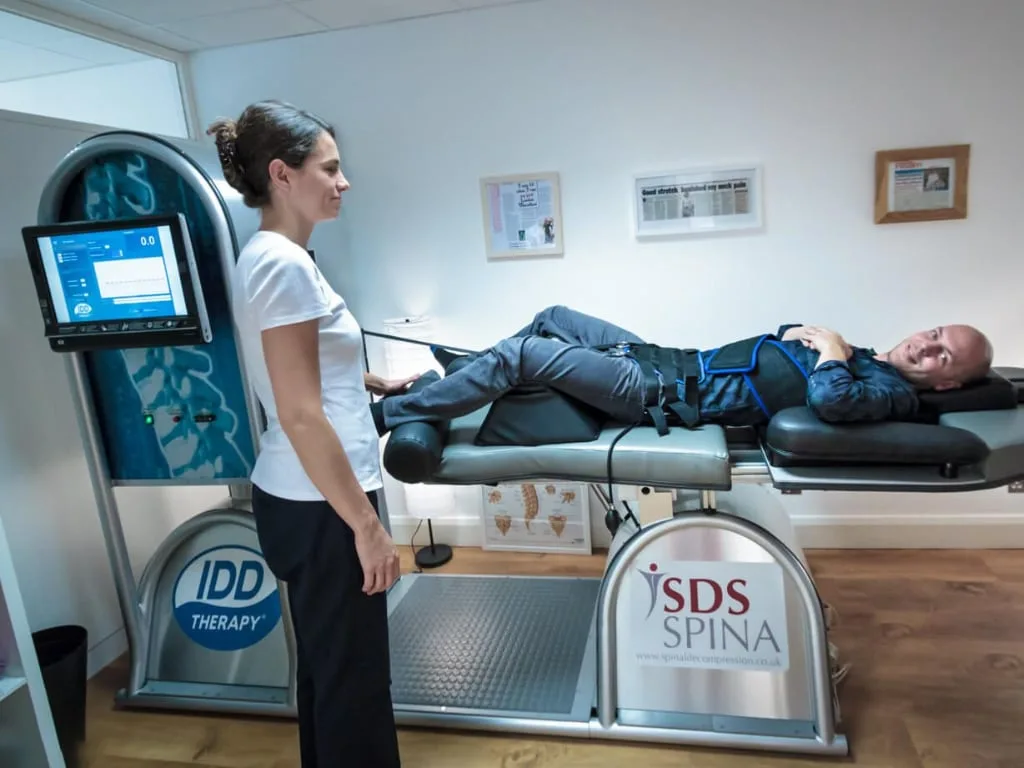
Disc Bulge or Herniation: In younger to middle-aged adults, this is the most common cause. Disc material pressing on nerve roots produces the classic leg symptoms of sciatica. IDD Spinal Decompression Therapy has reported success rates of 70 to 90% for appropriate disc conditions, making it one of the most effective non-surgical options.
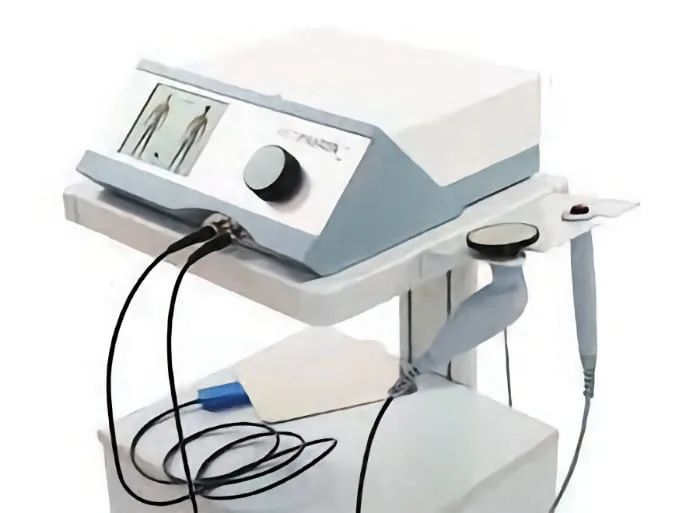
Degenerative Spinal Changes: For older adults, arthritis, bone spurs, and spinal stenosis are more typical causes. TECAR therapy and IDD therapy (where appropriate) can address the neural inflammation and disc component respectively.
Piriformis Syndrome: In approximately 10 to 20% of people, the sciatic nerve passes through the piriformis muscle. When this buttock muscle spasms or tightens, it can compress the nerve. Treatment: stretching 3 to 4 times daily, deep massage, dry needling, and activity modification, including strengthening and muscle-balancing exercises for the core, piriformis, and other hip muscles, and avoiding activities such as climbing stairs or running if they cause excessive pain, until the condition is under control.
Spondylolisthesis: Vertebral slippage can narrow the nerve exit foramen, causing root irritation. Treatment depends on the degree of slippage and symptoms.
Conditions That Mimic Sciatica
Occasionally patients with sciatic pain undergo investigations such as MRI scans of the lower back to look for a cause, and none is identified. There are various explanations for this: pain may be "referred" from the hip joint, the sacro-iliac joints, or from taut bands of muscle called "trigger points" in the lower back and buttock muscles. Alternatively, the irritation to the sciatic nerve may be in a part of the nerve below the lower back that wasn't imaged in the original scan; Piriformis Syndrome is an example of this.
Diagnosing Piriformis Syndrome
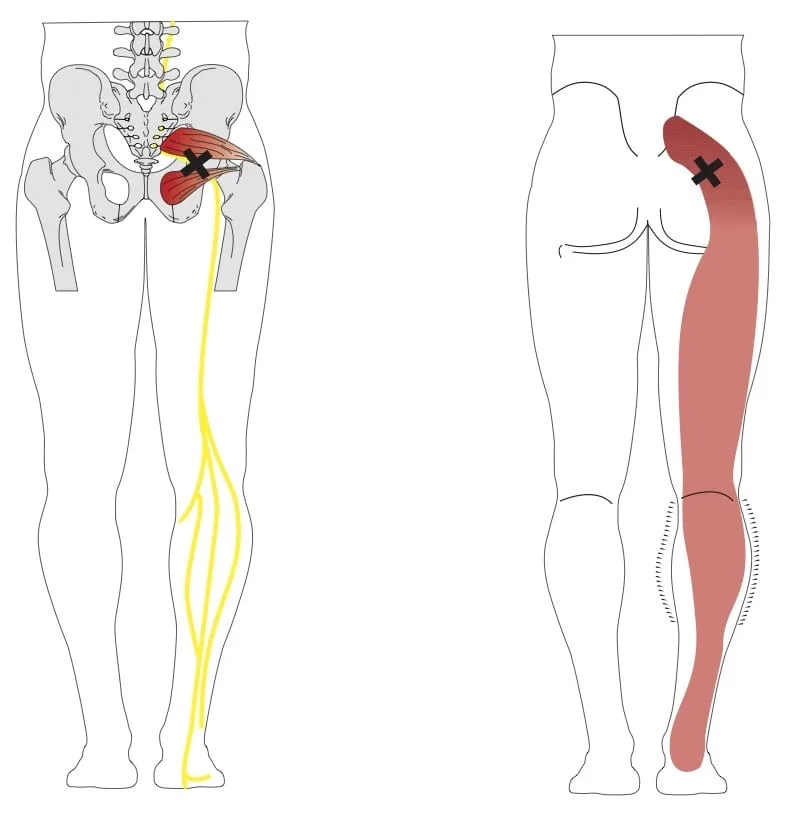
Because the sciatic nerve can be compressed by various causes, including a herniated disc, lumbar muscle strain, spinal stenosis, and facet arthropathy, which often co-exist and can cause the piriformis to tighten, diagnosing isolated piriformis syndrome can be challenging. CT scans, MRI, and EMG are used to exclude other causes of sciatic nerve compression.
Symptoms that can indicate piriformis syndrome include numbness in the buttocks, pain when climbing or descending stairs, tingling in the legs, and pain when sitting for long periods. Diagnosis combines a patient's history of pain and symptoms with a physical examination, including movements of the leg and hip that compress the piriformis muscle; if these reproduce the pain, piriformis syndrome can be diagnosed.
When to Seek Surgery
Surgery is typically reserved for persistent or severe cases, particularly when experiencing severe numbness or weakness in the leg, tingling around the genitals, or loss of bladder or bowel control (which requires urgent medical attention).
For isolated disc bulges, some spinal surgeons use microdiscectomy, removing just the bulging part of the disc using a microscope. This allows a smaller incision, less damage to the surrounding muscle and soft tissue, and a quicker recovery than larger open incisions. Its limitation is that access to the spine is restricted, so the surgeon may not be able to view the whole affected disc.
Call us on 020 8506 1000 for a sciatica assessment.