















Spine Plus Blog
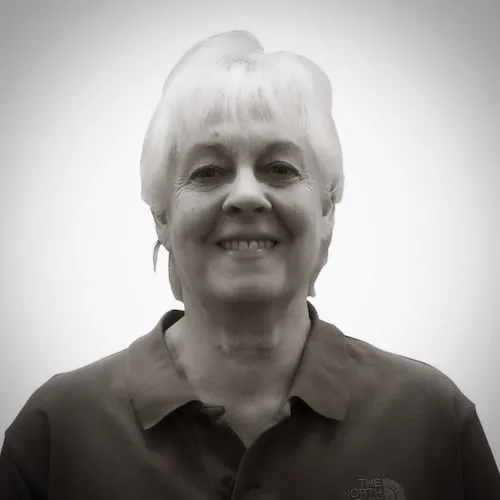
Stewart Avoids Repeat Back Operation with IDD Therapy
Published: 18 November 2022
Stewart had a micro-discectomy around 20 years ago for sciatica. Now, decades later, his discs had become spondylotic (degenerated and stiff), and nerves were being pinched again. He was facing the prospect of a repeat spinal operation.
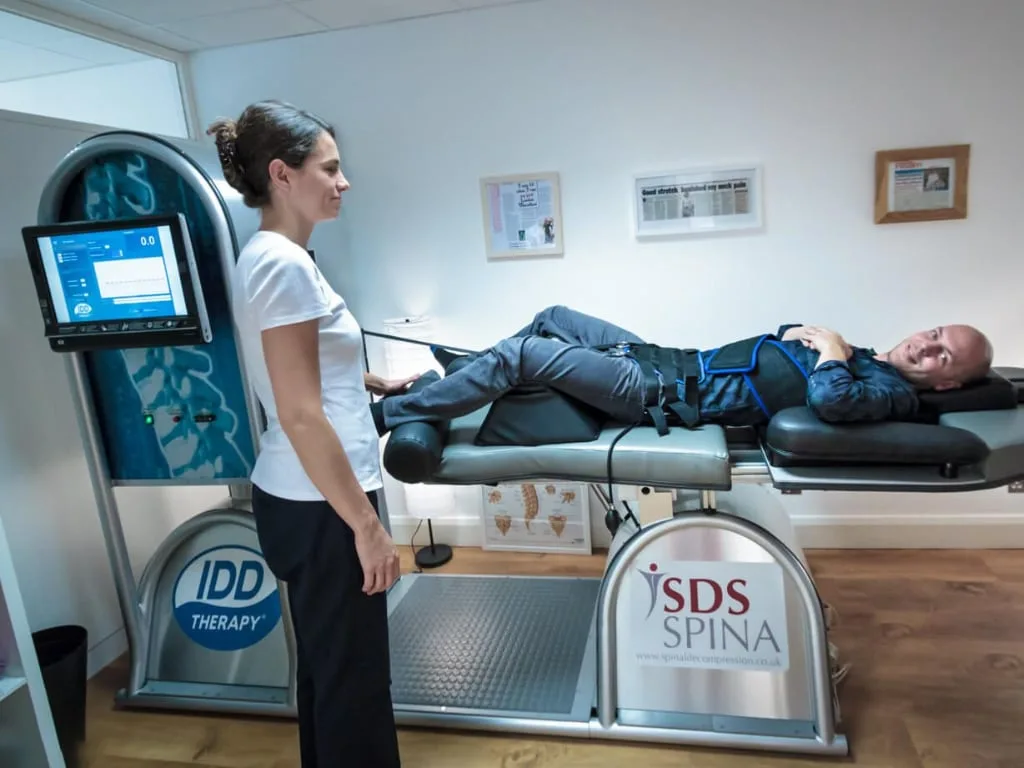
After trying IDD Therapy at Spine Plus, he was able to avoid going back under the knife. Watch Stewart describe his experience:
Stewart's Case at Our Chigwell Clinic
Stewart had been a patient of ours before, for other problems, so when his old sciatica symptoms returned he came back to our Chigwell clinic to see if we could help. Keen to avoid further surgery, which this time could have meant a bigger operation than his original micro-discectomy, he wanted to explore every non-surgical option first.
Our first step was to organise an MRI scan. Rather than relying only on the radiologist's report, we reviewed Stewart's MRI images ourselves alongside his clinical examination findings, which is how we work out whether we can genuinely help a patient and how to plan their treatment exactly, even if that sometimes means referring them on to another specialist instead.
After examining Stewart and going through his MRI images, we were confident IDD Therapy was the most appropriate non-surgical approach for him ahead of considering further surgery. He was assessed as having a category 3 disc problem, meaning two disc levels were contributing to his symptoms, which meant he was likely to need an extended course of treatment.
Stewart's Treatment and Recovery
Somewhat unusually, Stewart felt a lot of pain relief within just a few treatment sessions. This early relief was most likely down to the temporary easing of pressure on his pinched nerves, improving blood flow and circulation to them. At that early stage, though, he hadn't yet had enough sessions for the discs themselves to properly improve, and his symptoms returned.
As one of the UK's most experienced providers of Spinal Decompression Therapy, and through our contact with IDD Therapy clinics worldwide, we were confident Stewart would go on to achieve longer-lasting improvement once he completed the full recommended course of treatment. That's exactly what happened, and Stewart was able to avoid repeat back surgery.
Post-Surgical Disc Degeneration
It's not uncommon for patients who've had spinal surgery to develop problems at adjacent disc levels years later. Removing a disc or fusing a segment changes the load distribution in the spine, placing additional stress on neighbouring levels. Over time, these levels can degenerate.
IDD Therapy can be appropriate for post-surgical patients in many cases, as long as there is no instrumentation (metalwork) at the level being treated. The gentle computer-controlled distraction addresses the disc itself rather than the surgical site, making it a viable option for degenerated adjacent levels.
Facing Repeat Surgery
Repeat spinal surgery carries higher risks than first-time procedures due to scar tissue and altered anatomy. For many patients, avoiding a second operation is a strong motivation to explore all non-surgical options first. IDD Therapy is one of the most effective non-surgical tools available for disc-related nerve compression.
If you're facing spinal surgery, whether for the first time or as a repeat procedure, call us on 020 8506 1000 to discuss whether IDD Therapy could be an alternative.