















Spine Plus Blog
Treating Sciatica Pain
Published: 24 August 2015

Sciatica is pain felt in the buttock, thigh, and/or calf as a result of compression or irritation to the sciatic nerve. Symptoms range from mild irritation to severe shooting pain, sometimes accompanied by numbness or weakness in the feet. Accurate diagnosis is fundamental to selecting appropriate treatment.
The Sciatic Nerve
The sciatic nerve originates from nerve roots in the lower spine, forms a trunk in the buttock region, and branches into two nerves below the knee. This extensive pathway means compression can occur at multiple points along its route.
Common Causes and Treatment Approaches
There can be various causes for sciatica, each needing a distinct treatment approach. Different causes can also co-exist at the same time, requiring a combined treatment plan. The key to successful treatment starts with accurate diagnosis. It's also worth noting that certain conditions can produce "pseudo-sciatica": pain that is similar to sciatica but doesn't originate from irritation of the sciatic nerve itself, but from other tissues that refer pain in a similar pattern.
Piriformis Syndrome
In approximately 20% of people, the sciatic nerve runs through the piriformis muscle in the deep buttock. Excess tension in this muscle can pinch the nerve, causing buttock and leg pain that mimics disc sciatica. Treatment: deep massage and dry needling directly to the piriformis, plus stretching exercises.
Gluteal Trigger Points
Muscle knots (trigger points) in the gluteal muscles create referred pain down the leg that can mimic true sciatica. Dry needling and deep massage are highly effective.
Facet Joint Referred Pain
Facet joints at each level of the spine can, when inflamed or degenerated, refer pain into the buttock and upper leg. Treatment: dry needling, manipulation, and exercises. In extreme cases, facet joint injections may be required to reduce the nerve irritation, in which case we refer patients to our partner pain doctors in Harley Street.
Disc Bulge or Herniation
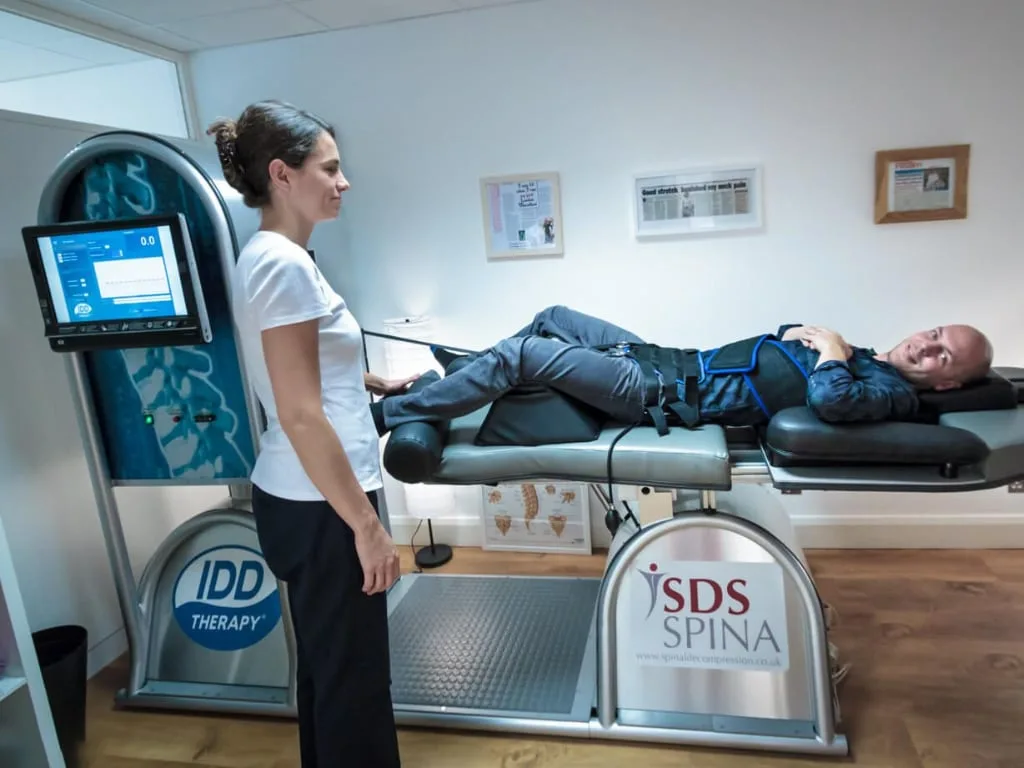
The most common cause in adults under 60, where disc material presses on nerve roots. For severe cases, surgery to remove the bulge may be required, but this is often unnecessary and is only used when other treatments have failed. IDD Spinal Decompression Therapy uses computer-controlled pulling forces to distract the specific spinal segment where the bulge is, reducing pressure on the disc and encouraging healing. Medical trials show a 70 to 90% success rate for significantly reducing or eliminating pain with IDD Therapy. Since introducing this technology, we've been able to help many more patients than was previously possible, and have prevented several from needing surgery.
Call us on 020 8506 1000 for a proper sciatica assessment.